Nature days can provide three options for the requirements for Unit 2 of the Made for Wales Ready for the world GCSE Geography starting teaching 2026.
Option 1: 2 days in the field
Day 1: Field work skills day and planning.
This field trip will provide skills in the six stages of the enquiry process and provide opportunities to choose and plan their enquiry question for their NEA.
The focus will be on planning an enquiry and developing skills in data collection:
- Selecting the correct location
- Designing a suitable enquiry question
- Using maps to locate fieldwork sites
- Risk assessment
- Ethical data collection
- Sampling approaches
- Data collection – qualitative and quantitative
This field work day will provide skills required for students to undertake the planning for their NEA assessment for Unit 2.
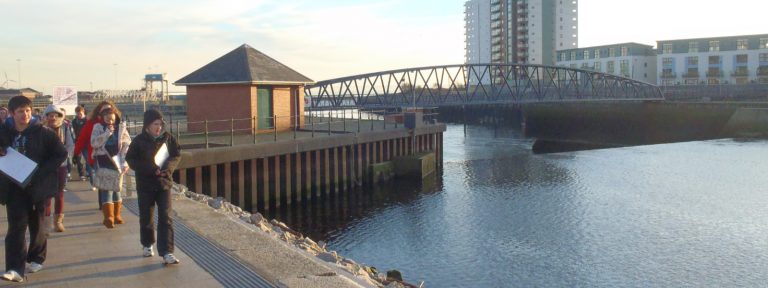
A number of locations can be visited and can either be linked to where the NEA will take place.
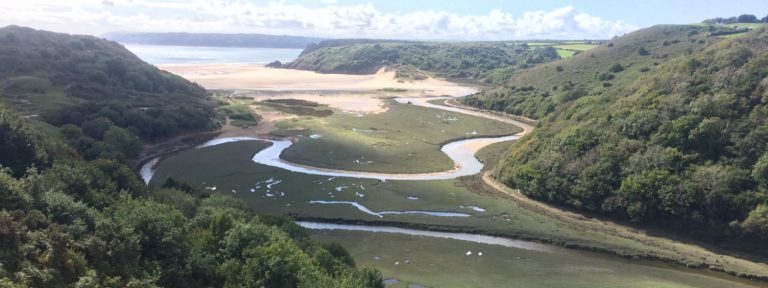
Rivers
The characteristics of river landforms, flood risk and management and sustainability.
Coasts:
The characteristics of coastal features, coastal defences and sustainability.
Weather:
Microclimate in built up and natural environment.
Retail in urban areas:
Looking at the concept of place and how it changes using a range of qualitative methods to cover all aspects of the enquiry process.
Land use:
How land use has changed over time.
Sustainability:
Urban and rural sustainable environments using Egan’s wheel
Day 2: Data collection field day
After day 1, schools will then go back to school and use the skills and experience from day 1 to plan their NEA and undertake task 1 and 2.
Once ready the class will return to the selected location for their NEA and day 2 will provide opportunity for data collection.
NEA day 2:
- Identify location for data collection on site
- Undertake data collection using equipment provided
- Evaluate the sampling and data collection techniques
By the end of day 2 the students will have collected all their data for their NEA and should have completed task 1 and 2. Then back at school they can complete the rest of the NEA using the data.
Support will be given to teachers on choosing the right location to allow all students to access the requirements of the NEA based on the topics set by WJEC.
Option 2: 2 days, one in class and one in the field
Two day option includes a half or whole day of planning and teaching the skills to plan an NEA undertaken in school. By the end of the day the pupils will have –
- Created a suitable enquiry question
- Developed sub questions
- Written a method for collecting the data including the location, and sampling
- Created data collection sheets for their enquiry
After day 1, schools will then go back to school and use the skills a from day 1 to plan their NEA and undertake task 1 and 2.
Once ready the class will return to the selected location for their NEA and day 2 will provide opportunity for data collection.
NEA day 2:
- Identify location for data collection on site
- Undertake data collection using equipment provided
- Evaluate the sampling and data collection techniques
By the end of day 2 the students will have collected all their data for their NEA and should have completed task 1 and 2. Then back at school they can complete the rest of the NEA using the data.
Support will be given to teachers on choosing the right location to allow all students to access the requirements of the NEA based on the topics set by WJEC.
Option 3: 1 day in this field
This is for those who cannot accommodate the two day option. All the preparation teaching will have to be undertaken by the geography teacher but a video and lesson plan and resources will be provided for the selected topic to help them pupil prepare for the field day.
PUPILS MUST have undertaken the planning and generated their own enquiry title, plan and created their own data collection sheets before the field trips.
The field trip day will involve:
- Identify location for data collection on site
- Undertake data collection using equipment provided
- Evaluate the sampling and data collection techniques
By the end of the day the students will have collected all their data for their NEA and should have completed task 1 and 2. Then back at school they can complete the rest of the NEA using the data.
Support will be given to teachers on choosing the right location to allow all students to access the requirements of the NEA based on the topics set by WJEC.
Contact Nature Days to see which option will suit your school.

Relevant Subject(s): Geography
Cost: £350
More Info